Max Security DepositNot to exceed two weeks’ rent if a tenancy is week-to-week, one-half months’ rent if a tenancy is month-to-month, and two months’ rent for terms greater than month-to-month.Full text below ↓
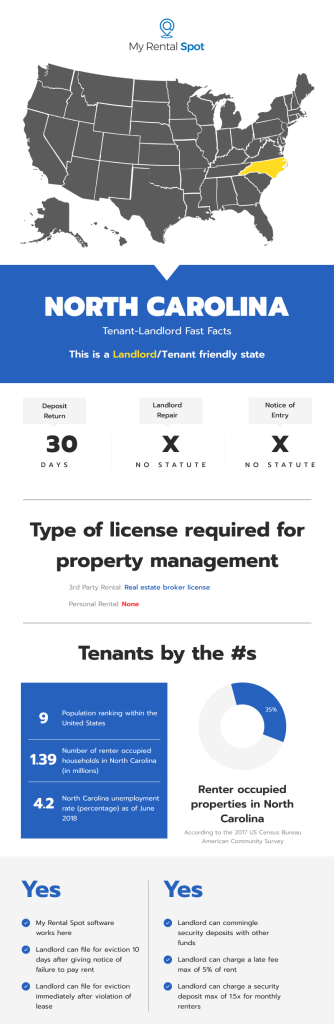
Deposit Returnis 30 days unless the landlord needs more time to evaluate the damage, upon which an interim notice may be sent within 30 days, with a final determination within 60 days.Full text below ↓
Entry NoticeNo Statute, but 24 hours is recommendedFull text below ↓
Landlords and tenants will face legal issues during the rental process, but not every case needs to involve the courts. This article will help you learn how the laws in your state handle everything from security deposits to termination notices so you can easily navigate these.
This article is notan exhaustive or a substitute for qualified legal advice. Laws and statutes are subject to change and may vary by county or city. You are responsible for performing your research and complying with all laws applicable to your unique situation.
We recommend consulting with the appropriate government agencies and a qualified lawyer if you have legal questions or concerns. Your state bar association may have a referral service to help you find a lawyer with experience in landlord-tenant law.
Security Deposit Maximum: Not to exceed two weeks’ rent if a tenancy is week-to-week, one-half months’ rent if a tenancy is month-to-month, and two months’ rent for terms greater than month-to-month. (NCGS § 42-51)
Permitted Uses of the Deposit:NCGS § 42-51 outlines the allowable uses of the deposit.
The deadline for returning the security deposit is 30 days unless the landlord needs more time to evaluate the damage, upon which an interim notice may be sent within 30 days, with a final determination within 60 days. (NCGS § 42-52)
Security Deposit Interest: No Statute
Separate Security Deposit Bank Account:
The landlord must deposit the funds into a trust account with a licensed and insured bank or savings institution in the State of North Carolina or furnish a bond from an insurance company licensed to do business in North Carolina. (NCGS § 42-50)
The landlord must notify the tenant within 30 days after the beginning of the lease term of the name and address of the bank or institution where his deposit is currently located or the name of the insurance company providing the bond. (NCGS § 42-50)
Pet Deposits: A reasonable, non-refundable pet deposit is allowed (NCGS § 42-53)
Advance Notice of Deposit Withholding: No (NCGS § 42-52)
Move-Out Checklist/Itemized List of Damages and Charges: Yes (NCGS § 42-52)
Record Keeping of Deposit Withholdings: No Statute
If rent is due in monthly installments, the landlord may charge a late fee of up to $15.00 or five percent (5%) of the monthly rent, whichever is greater. (NCGS § 42-46(a)(1))
If rent is due in weekly installments, the landlord may charge a late fee of up to $4.00 or five percent (5%) of the weekly rent, whichever is greater. (NCGS § 42-46(a)(2))
Prepaid Rent: No Statute
Additional Fees: Some fees are allowed and are specified in (NCGS § 42-46)
Tenant Allowed to Withhold Rent for Failure to Provide Essential Services (Water, Heat, etc.): A tenant cannot withhold rent for any reason unless a judge or civil magistrate allows the tenant to do so (NCGS § 42-44)
Tenant Allowed to Repair and Deduct Rent: No Statute
Landlord Allowed to Recover Court and Attorney Fees: No (NCGS § 42-25.9)
Landlord Must Make a Reasonable Attempt to Mitigate Damages, including an Attempt to Rerent: No Statute
Notices and Entry:
Notice to Terminate Tenancy – Fixed End Date in Lease: No Statute. Typically, no notice is needed as the lease expires.
Notice to Terminate Tenancy – Year-to-Year Lease: One month or more before the end of the current year of the tenancy. (NCGS § 42-14)
Notice to Terminate Tenancy – Month-to-Month Lease: 7 days (NCGS § 42-14)
Notice to Terminate Tenancy – Week-to-Week Lease: 2 days (NCGS § 42-14)
Notice to Terminate Tenancy – The Leasing of a Space for a Manufactured Home: 60 days (NCGS § 42-14)
Notice of Date/Time of Move-Out Inspection: No Statute
Self-Help Evictions: If a tenant is unlawfully evicted, the landlord is liable for the actual damages incurred to the tenant. (NCGS § 42-25.9)
Abandonment of Personal Property: Personal property is considered abandoned ten days after lawful repossession, formal written notice is posted inside and outside of the property, and there has been no communication from the tenant. Landlords must follow specific instructions in NCGS § 42-25.9 and NCGS § 42-36.2.
Disclosures and Miscellaneous Notes:
Landlord’s Duties: A detailed list of landlord responsibilities is provided in NCGS § 42-42.
Renter’s Duties: A detailed list of tenant responsibilities is provided in NCGS § 42-43.
Domestic Violence Situations:
Proof of Status: The Landlord is entitled to verify the claim of Domestic Violence status. (NCGS § 42-42.2)
Protection from Termination: The landlord cannot terminate a tenancy, fail to renew a living, or refuse to enter into a rental agreement with a victim of domestic violence. (NCGS § 42-42.2)
Early Termination Rights: A tenant can terminate a lease with 30 days written notice and proof of Domestic Violence status. (NCGS § 42-45.1)
Locks: Upon request, the landlord must change or rekey the waves, or give the tenant permission to do so, at the tenant’s expense within 48 hours if the perpetrator does not live in the same dwelling unit as the victim, and 72 hours if the perpetrator lives in the dwelling unit. If a landlord fails to change the locks within 48 hours, a tenant may do so but must give a copy of the keys to the landlord within 48 hours. (NCGS § 42-42.3)
Lead Disclosure: Landlords must disclose all known lead paint hazards. Landlords must also provide tenants, as an attachment to a written lease, with an information pamphlet on lead-based paint hazards.
Retaliation: For 12 months after that, a landlord must not terminate or refuse to renew a lease to a tenant who has filed an official complaint to a Government Authority, been involved in a tenant’s organization, made a good faith complaint, or exercised a legal right. Other actions are prohibited. (NCGS § 42-37.1)
Business License Required: No statewide statute, but local cities and counties may have regulations and requirements. Check with your local governing authority.
This guide is not legal advice. Laws change and may vary by county or city — verify
against the linked official statutes and consult a qualified lawyer for your situation.